
In-House Tire Inflator Engineering: Pump Core & PCB
Engineered In-House. From the Pump Core to the PCB
Our manufacturing process for tire inflators goes deeper than most factories.
Most inflators are assembled.
Ours are engineered.
In the tire inflator industry, most brands buy their pump cores and circuit boards from third-party suppliers and simply assemble the final product. The result is a product nobody fully controls — not the supplier, not the brand.
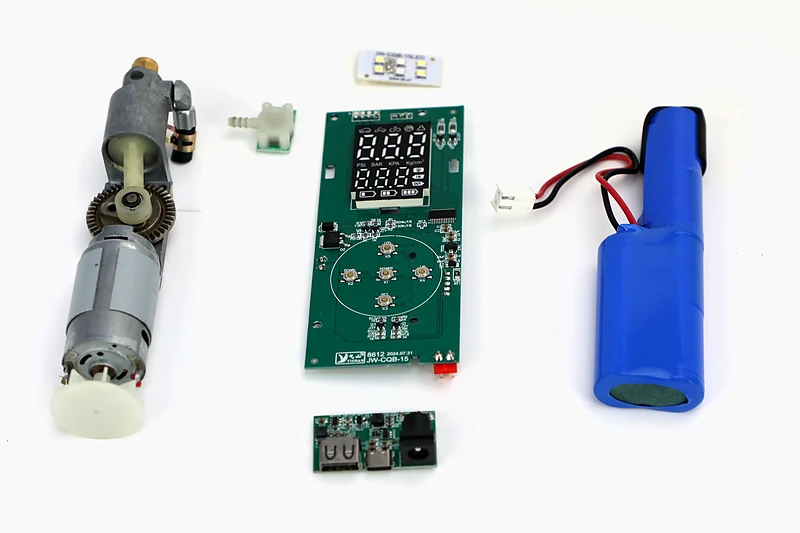
AUTOROUT takes a different path. The pneumatic heart of our inflators — the pump core — and the electronic brain — the PCB — are both designed and produced by our own engineers. We control the components that determine inflation speed, pressure accuracy, protection logic and service life. When something can be improved, we improve it ourselves, without waiting for a supplier.
Our R&D Manager

Blues Lan
With over 10 years of R&D experience in automotive electronics and air pump products, Blues Lan leads the development and iteration of air pumps, car vacuum cleaners and jump starter all-in-one products. He has deeply participated in core projects of Xiaomi air pump series. Skilled in 0-to-1 full-cycle development, structural design, hardware selection, performance debugging and reliability verification, he accurately delivers customized ODM solutions. He manages the entire product lifecycle from project initiation and prototype testing to mass production, coordinating cross-department teams to optimize performance, cost and quality for stable project delivery.
The pump core: where an inflator wins or dies
The pump core determines everything buyers care about: how long it takes to fill a tire, whether the unit overheats after two minutes, and how many years it keeps performing. Our cores are designed in-house for each pressure and flow class — not picked from a catalog.
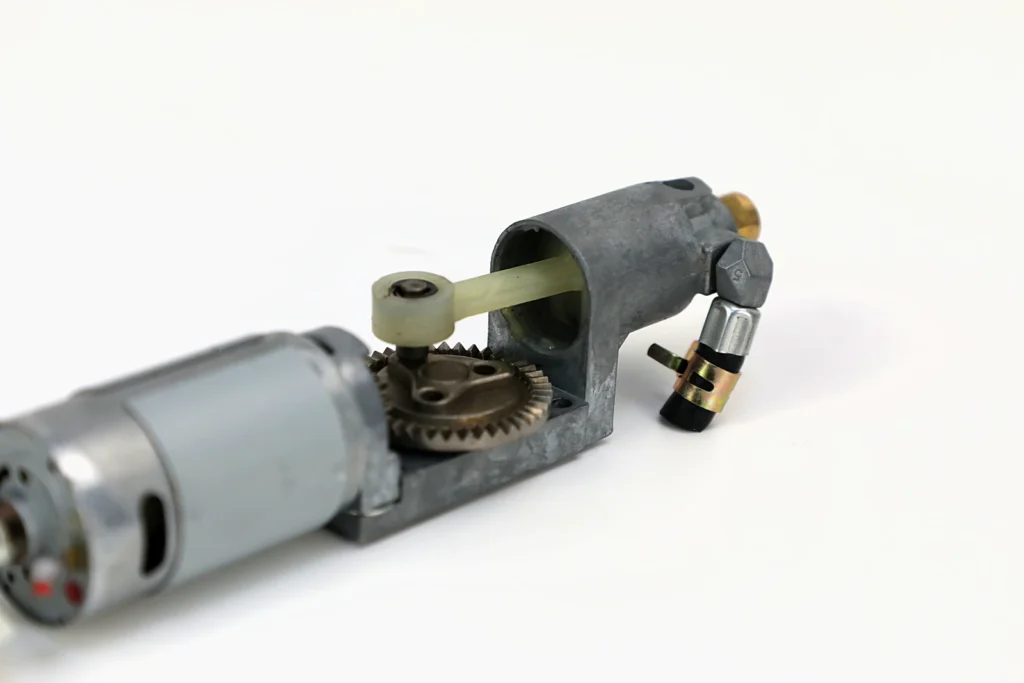
Cylinder & piston design
Cylinder bore, piston seal and valve plate are matched for compression efficiency and minimal heat build-up, so the pump runs cooler and lasts longer.
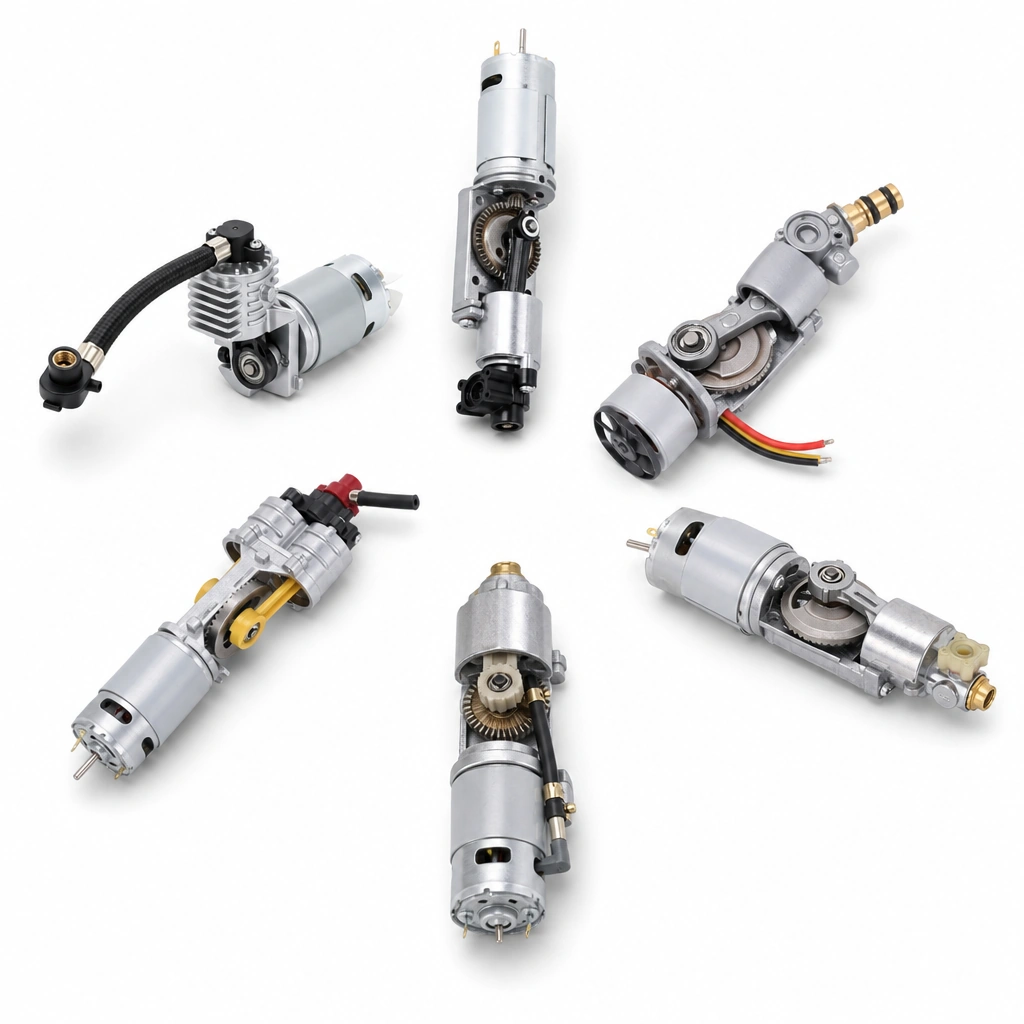
Pressure-class architecture
We design different core structures for different jobs: high-pressure cores up to 150 PSI for car and SUV tires, and high-flow dual-cylinder cores up to 22 L/min for fast filling.
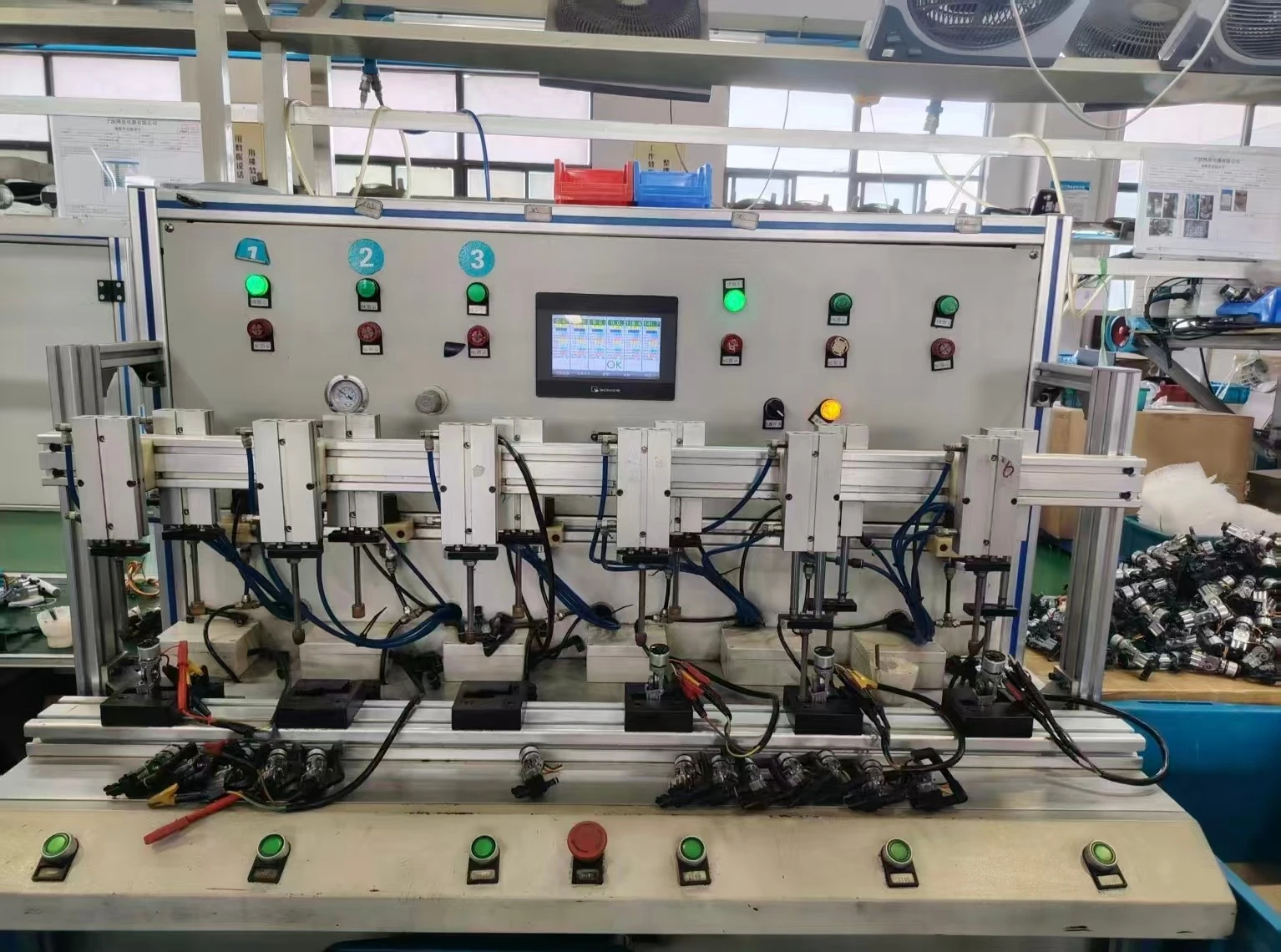
Durability first
Moving parts are specified for repeated use and tested for endurance before a model goes into production.
The PCB: pressure accuracy and protection, written by us
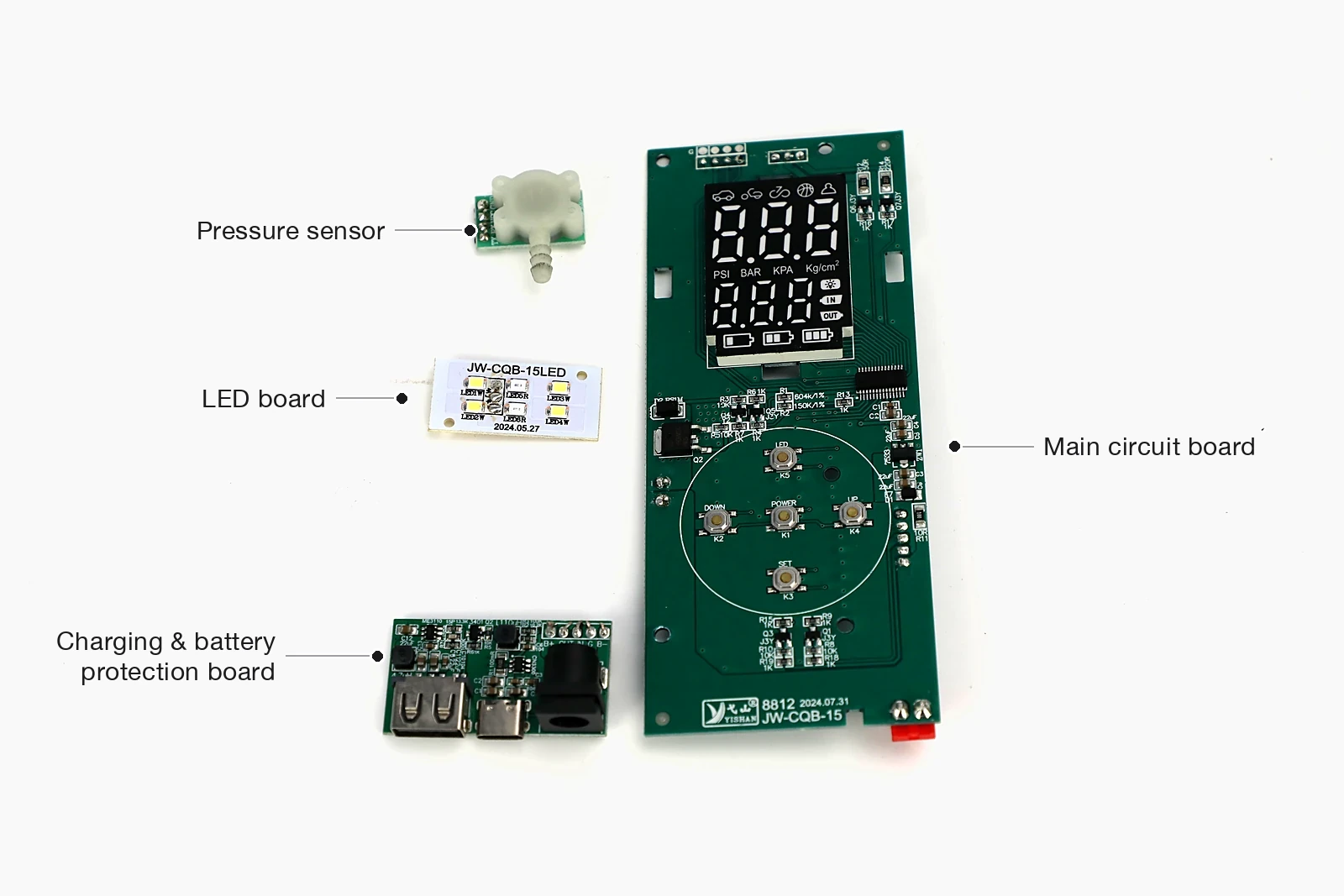
A tire inflator’s control board does more than light up a display. It reads pressure, decides when to stop, and protects the motor, battery and user. Our PCBs are designed in-house so the logic matches our pump cores exactly.
- Pressure sensing & digital display — accurate pressure readout in PSI, BAR and kg/cm², so users set the target and walk away.
- Auto shut-off logic — the pump stops precisely at the preset pressure, protecting tires from over-inflation.
- Protection circuitry — over-current and over-temperature protection guard the motor and battery during heavy use.
- Smart charging — Type-C input management keeps charging fast, safe and simple.
What in-house engineering means for your business
Consistent quality, batch after batch
One team owns the core parts, so the 10,000th unit performs like the first. Fewer surprises in your customers’ hands.
Customization without limits
Want a different pressure curve, a metal housing or your own control logic? We change the design at the source — not bolt on a supplier’s part.
One accountable partner
When something matters, you talk to the engineers who designed it — not a salesperson relaying questions to a factory that doesn’t build the parts.
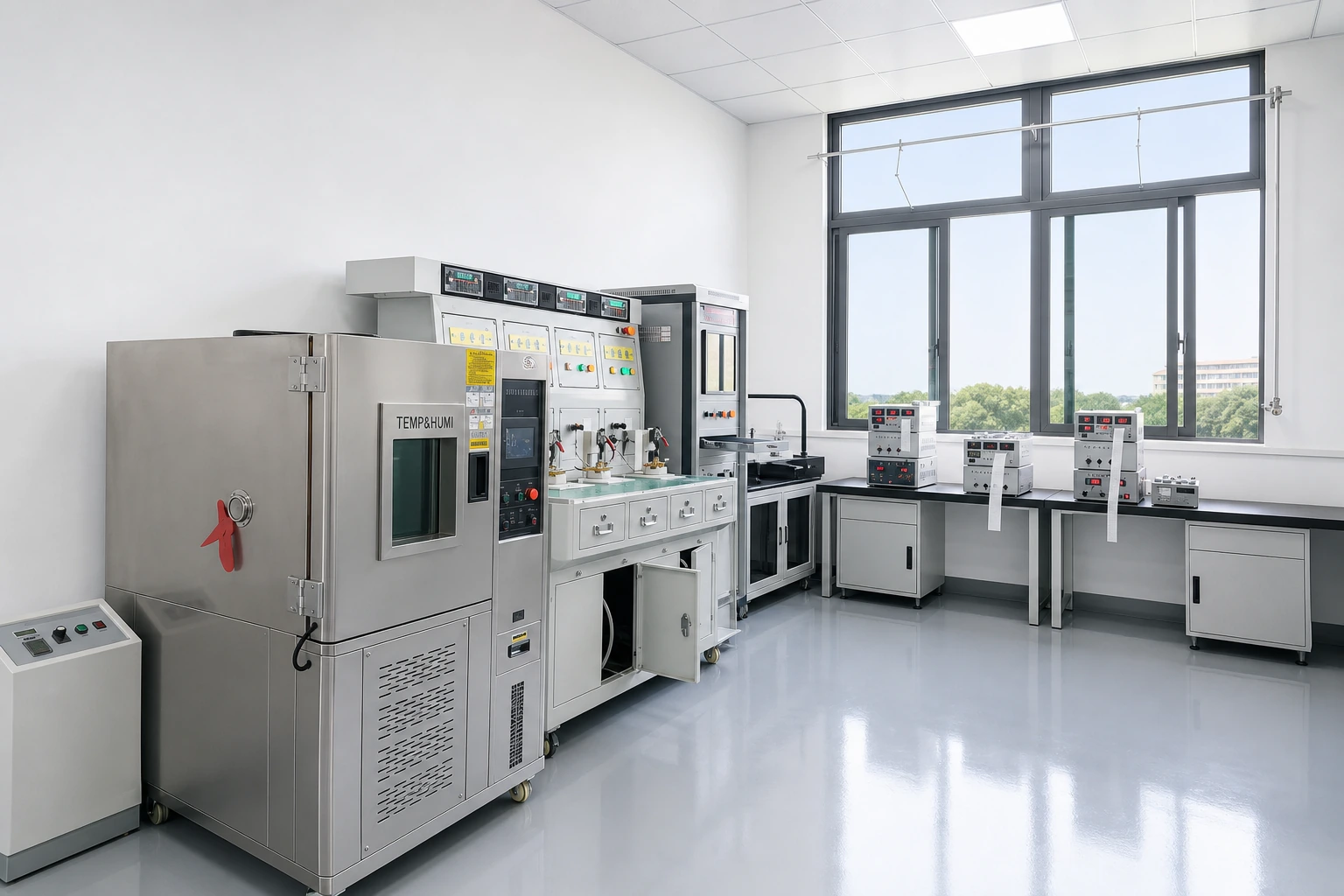
Each of the four checks below is part of our tire inflator testing routine
— not a spot check.
Every unit is tested like it’s going on our own car
- Pressure accuracy check
- Flow rate test
- Durability test
- Electrical safety check
From your idea to a sample in 30 days
Custom product development, rapid prototyping & mass production
Brief
Share your requirements & concept
Design
3D modeling & structural optimization
Sample
Prototype fabrication within 30 days
Test
Performance & reliability verification
Production
Mass manufacturing & quality control